11/12/2025 | Maria Adelaide Marchesoni
Sidoli Collection
Sandra Varisco and Eugenio Sidoli collect contemporary art off the mainstream. For over twenty years, they have been choosing artists and projects outside the official circuit, transforming their collection into a living, collaborative practice
What does “collecting” mean to you?
For most people, a collection is a more or less structured gathering of objects with a common identity. The collector brings together what is similar, says Benjamin, and undertakes a struggle against dispersion. There is no doubt that our art collection has both characteristics. For Eugenio and me, however, collecting has taken on a project-based approach that goes beyond the mission of “gathering” and “saving.” For many years, we have acquired most of our artworks as a result of our collaboration with artists, planning projects, and working together.
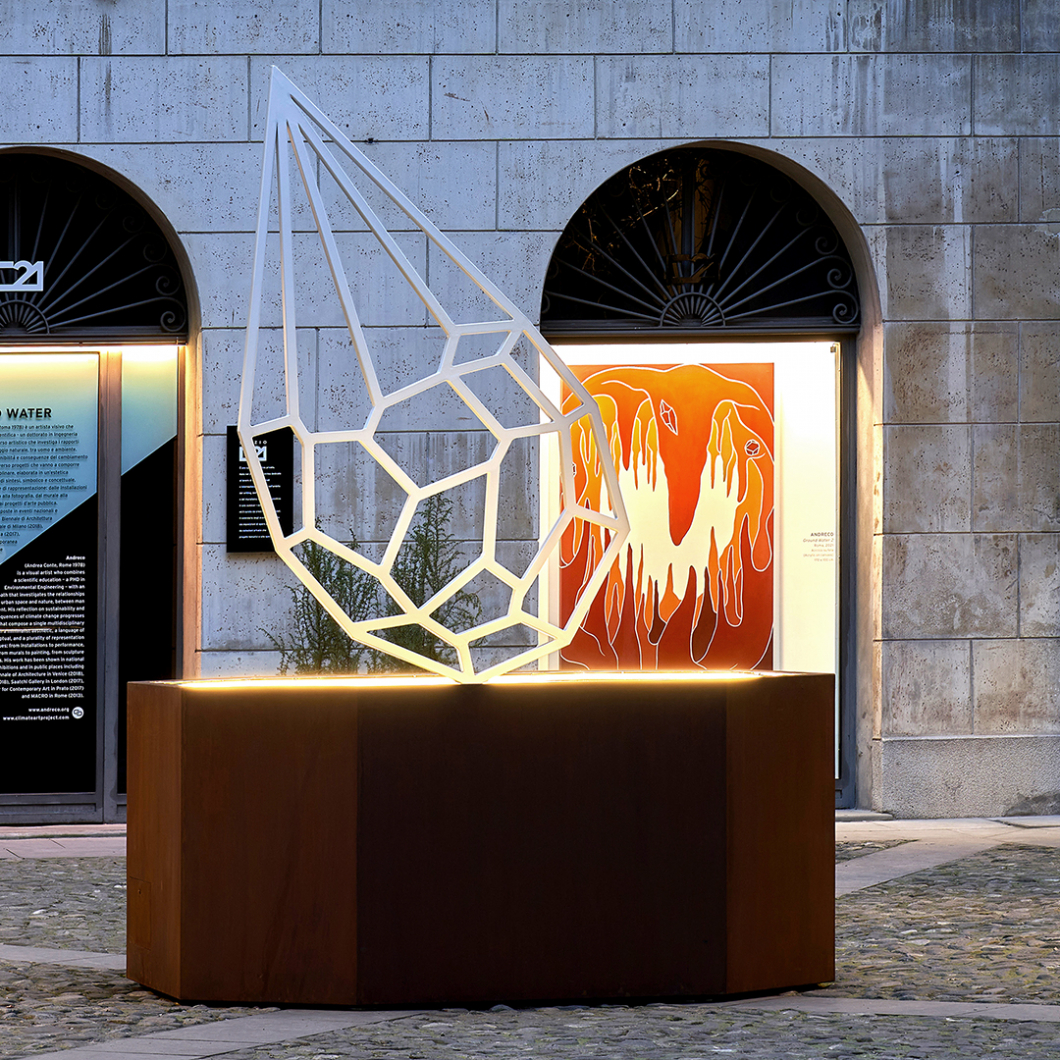
Andreco, GROUNDWATER, 1080, Ph. Fabrizio Cicconi
When and why did you start collecting?
I am a bibliophile and have been collecting objects since I was a teenager. Collecting is my heuristic; I learn by creating a relationship with the objects that enter my life. However, I only became interested in collecting contemporary art with Sandra in the early 2000s, when we were just married. We were living in Serbia, and I had promoted a competition for young artists with Philip Morris; it was a unique opportunity to explore the world of contemporary art. We had two apartments—in Nis and Belgrade—with empty walls, so we started visiting studios to buy our first works.
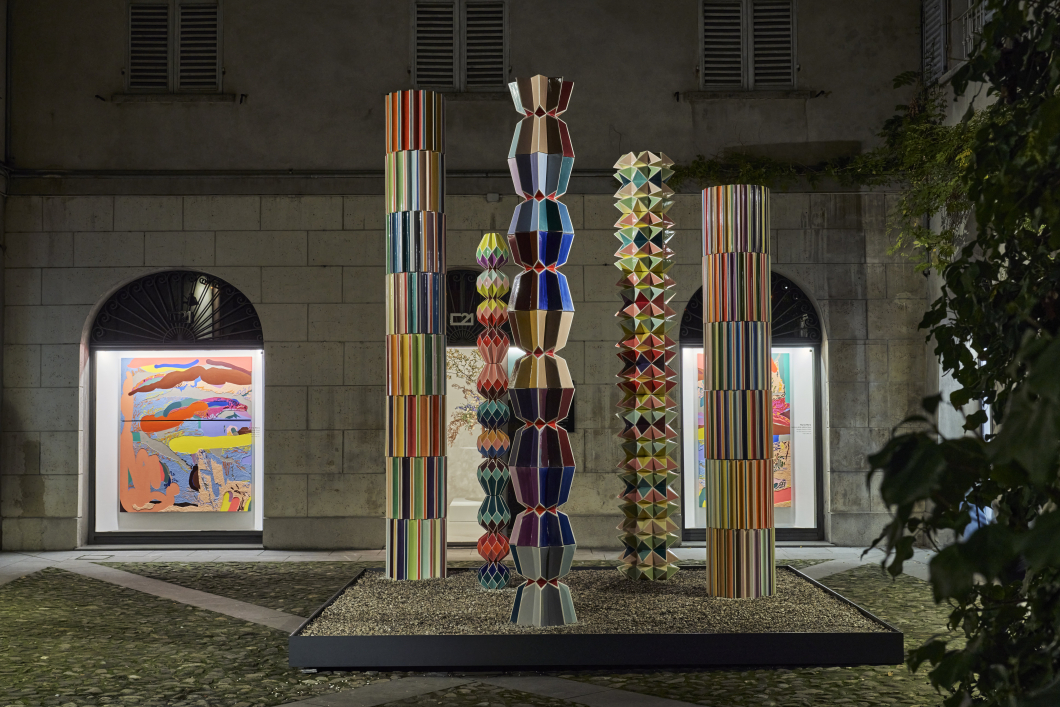
Nuria Mora,Totems, Ph Fabrizio Cicconi
Who do you share your passion with?
First and foremost, between the two of us. Art is truly a shared space, a source of complicity and daily commitment; then with the artists, curators, and critics who come to our home; and finally with anyone who steps through the door of SpazioC21 to find out what we do and why.
And with other collectors?
Yes, over the years we have met and spent time with many other collectors, both in Italy and abroad. We learned that having a network of relationships to exchange ideas and share your choices is very important. We also collaborated with some of them in organizing a few exhibitions.
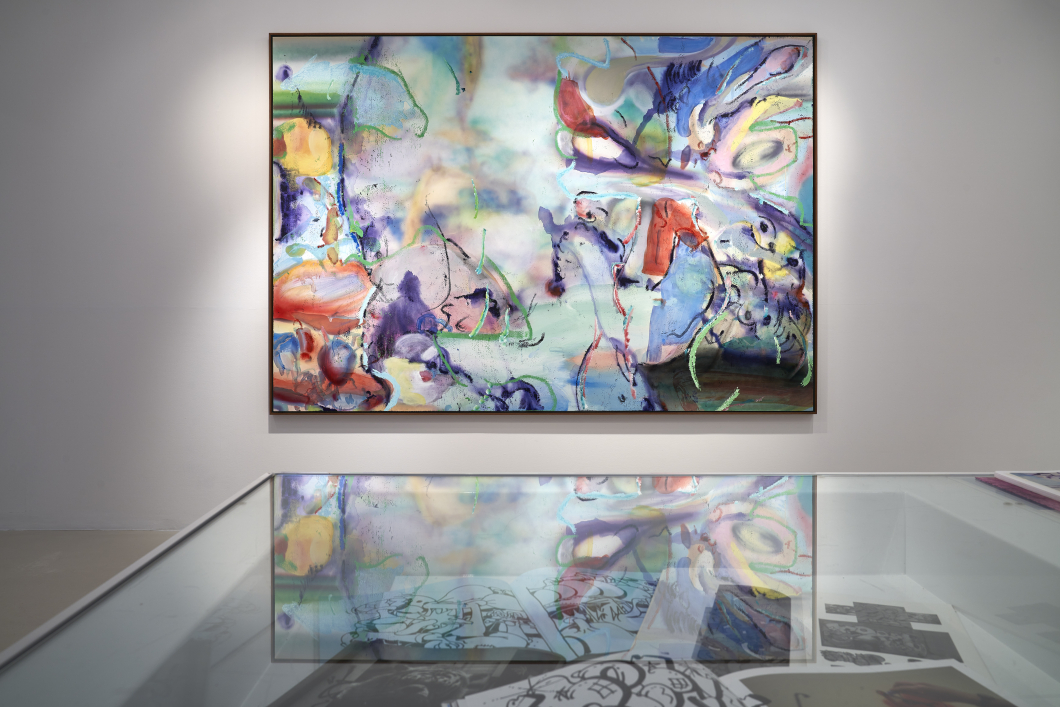
Antwan Horfee, My Rug your Arms, 2023, Ph Fabrizio Cicconi
The focus of your collection, if there is one.
At first, we chose works based solely on aesthetics, pieces that resonated with us. Then, as our acquisitions grew, we began to consider the identity of our collection and its legacy over time. We asked ourselves what the works we'd bought might one day tell us and whether they would be able to perform in perfect harmony. That's why, 15 years ago, we set ourselves a mission and our collecting became more specialized. We purchase works by artists of any nationality who grew up in metropolitan subcultures and began their careers by dedicating themselves to one or more of the various forms of non-commissioned public art, such as graffiti, stencils, or poster art. Chronologically, our research began in New York in the 1970s—inspired by experiences such as Colab and Fashion Moda—and extends to the present day. The artistic field that interests us is multimedia, because it includes photographs and silkscreen prints, canvases and sculptures, xeroxes and posters, video art, and works made from recycled materials. We developed a passion for artistic activism and those expressions of opposition to official art that developed in the underground of big cities, primarily those in which we lived.
Art on walls has always been a part of our lives as expats, whether in Serbia, Spain, or Rome. Some people identify our field as “post-graffiti,” but the definition is a bit reductive because it excludes artists who are relevant to us, such as John Fekner, John Ahearn, Richard Hambleton, Ken Hiratsuka, Keith Haring, Zeus, Invader, and Shepard Fairey... who have never done graffiti.
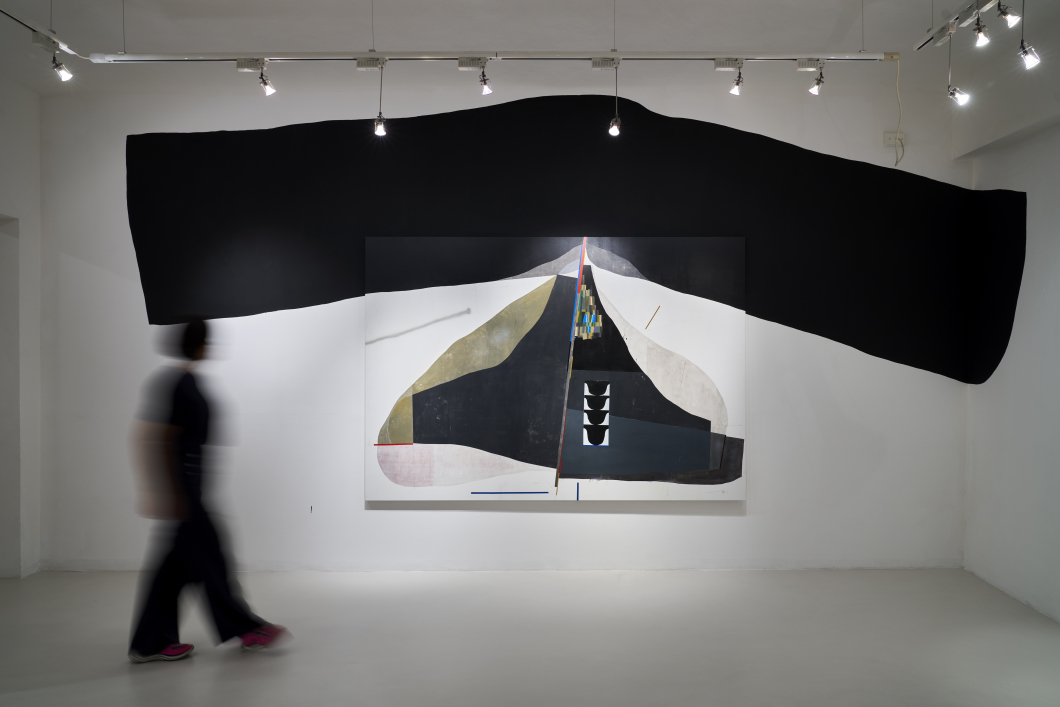
Eurasia, 2022, Ph Fabrizio Cicconi
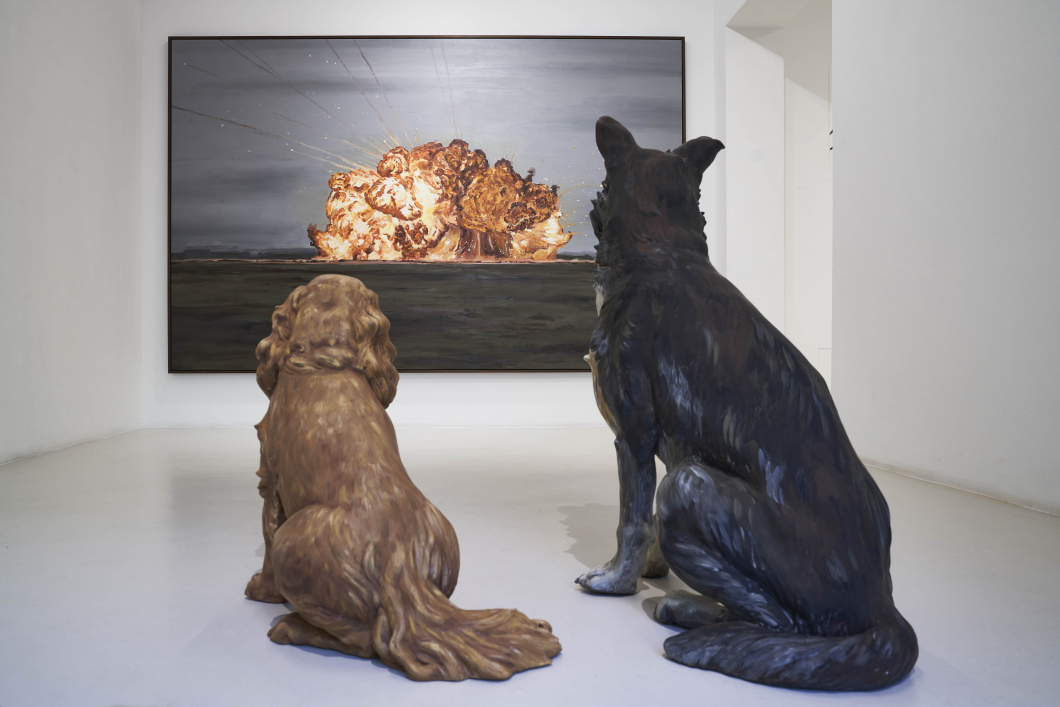
Escif, Sorry for fukushima, Ph Fabrizio Cicconi
How did the SpazioC21 project come about?
It was a natural development of our habit of offering residencies; initially, artists were invited to create a work for our collection. Then some friends asked us if they could be part of the commission, and we decided to try to promote the work of these artists to other enthusiasts. Five to ten works are already a small exhibition. We had a suitable place for artists to work and exhibit their work... and we took advantage of it.
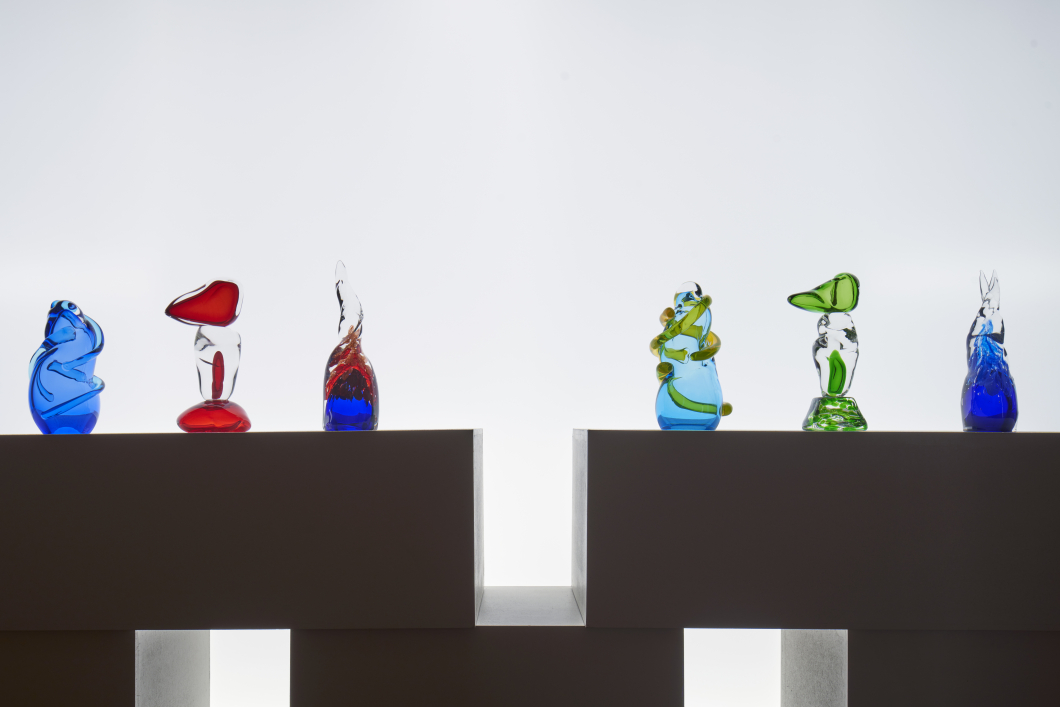
EGS, Installation view at Villa Levi Terrachini, Reggio Emila, Ph Fabrizio Cicconi
What projects have enhanced the space in the past?
Since 2018, we have organized and promoted more than 30 exhibitions featuring as many artists. All the projects exhibited at SpazioC21 were conceived in collaboration and were financed and produced by us in Reggio Emilia; all of them are developed ‘on site’ and are complex projects: from the large rayographs in the darkroom created with Marco Grassi PHO, to the extra-large ceramics by Nuria Mora; from the marble floor engraved by Stefano Serretta, to the sculptures by MP5, to the latest blown glass creations made with EGS in Murano.
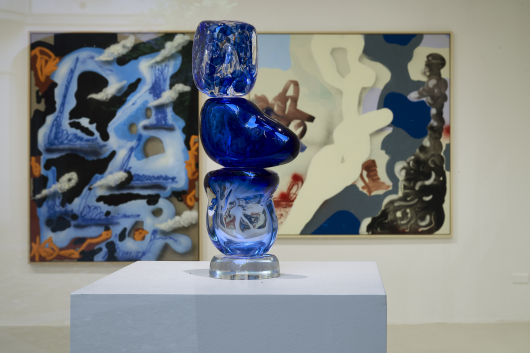
EGS, SPAZIOC21, Installation in gallery, Ph Fabrizio Cicconi
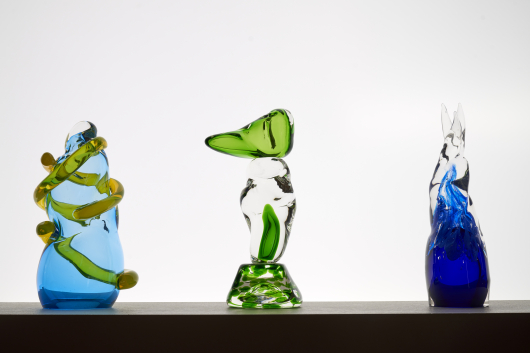
EGS, SPAZIOC21, installation at Levi Terrachini, Reggio Emila, Ph Fabrizio Cicconi
Can you tell us about the latest project dedicated to a solo show by the artist EGS?
EGS is a Finnish artist with a career spanning more than 20 years. He paints and sculpts, particularly with blown glass, and has had many group and solo exhibitions that have built his popularity in the markets of Northern Europe. He is also a legend in the world of graffiti. We have been in contact since 2016, when we acquired his first works—including one of his first glass sculptures—at a post-graffiti group exhibition in Modena. We were immediately struck by the code and eclecticism of his work. We were guests at his first solo show at the Kunsthalle in Helsinki in 2018, and since then we have been planning to develop a production together.

EGS, work in progress at LASISMI, Courtesy: SPAZIOC21, Ph Marko Rantanen
What kind of collaboration did you develop with the SEGUSO art glassworks in Murano?
The residency we planned included both the production of canvases and a dialogue between Finnish and Venetian glassmaking traditions. We built a bridge between Seguso Vetri d'Arte in Murano and the Lasismi glassworks in Rijimaki. The INVISIBLE IDENTITY exhibition presents 30 blown glass sculptures created jointly by the artist and master glassmakers, now on display at Villa Levi Terrachini in Reggio Emilia, not far from SpazioC21, and open to visitors until December 15, 2025.
For each exhibition we organize, we produce an artist's book, which in this case documents the backstage of the artist's productions through the eyes of three exceptional photographers: Paolo Pellegrin, Valerio Polici, and Marko Rantanen.

Eugenio e Sandra Sidoli